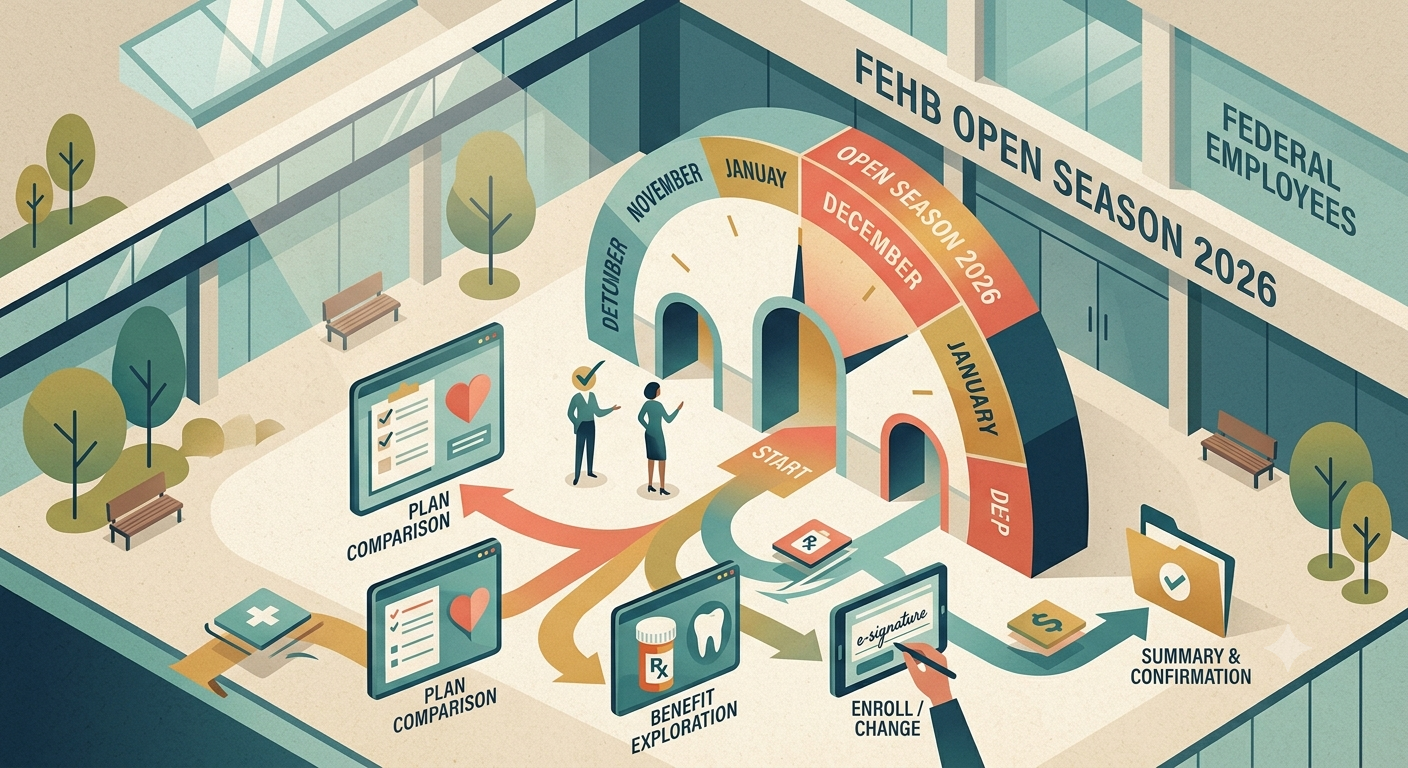
Every fall, federal employees and retirees get a limited window to review, switch, or enroll in their health insurance coverage through the Federal Employees Health Benefits (FEHB) Program. This guide covers everything you need to know about the 2026 Open Season — key dates, what you can change, and how to make sure you don’t miss it.
What Is FEHB Open Season?
FEHB Open Season is the annual period during which federal employees, retirees, and their eligible family members can enroll in, change, or cancel their FEHB health insurance plan. Outside of this window, changes are generally only allowed if you experience a Qualifying Life Event (such as marriage, birth of a child, or loss of other coverage).
For most years, Open Season runs during a set window in November and December, with elections taking effect the following January 1. Because exact dates can shift slightly year to year, always confirm the official dates through OPM’s Open Season announcement before making final decisions.
What Can You Change During Open Season?
During FEHB Open Season, you can:
- Enroll in FEHB for the first time, if you’re newly eligible or previously declined coverage
- Switch from one FEHB plan to a different one
- Change your enrollment type (Self Only, Self Plus One, or Self and Family)
- Cancel your FEHB coverage entirely
- Enroll in or change your FEDVIP (dental and vision) coverage, which runs on a similar but separate Open Season schedule
Why You Should Review Your Plan Every Year
Just like Medicare Advantage plans, FEHB plans can change their premiums, covered services, and provider networks from one year to the next — even if you don’t actively change anything. Each fall, your current plan carrier sends updated plan information outlining what’s changing for the upcoming year. Reviewing this information carefully, rather than automatically re-enrolling in the same plan, is one of the most valuable habits a federal employee can build.
Common reasons federal employees switch plans during Open Season include:
- A significant premium increase in their current plan
- A preferred doctor or specialist leaving the plan’s network
- A change in family health needs (for example, needing better coverage for a new prescription or ongoing treatment)
- Wanting to compare High Deductible Health Plans (HDHPs) with Health Savings Accounts (HSAs) against traditional FEHB options
FEHB Plan Types: A Quick Overview
FEHB offers several types of plans, and understanding the basic categories helps narrow down your comparison:
- Fee-for-Service (FFS) plans — allow more flexibility in choosing providers, often paired with a Preferred Provider Organization (PPO) network for lower costs.
- Health Maintenance Organizations (HMOs) — typically require using in-network providers and may require referrals for specialists, often with lower premiums.
- High Deductible Health Plans (HDHPs) — paired with a Health Savings Account (HSA), offering lower premiums in exchange for a higher deductible.
- Consumer-Driven Health Plans (CDHPs) — similar to HDHPs but paired with a Health Reimbursement Arrangement instead of an HSA.
We compare these plan types in more depth, along with which tends to suit different federal employee situations, in our dedicated FEHB plan comparison guide.
How to Prepare for Open Season
- Review your current plan’s Open Season materials as soon as they’re released, typically in late September or October.
- Compare your options using OPM’s official FEHB Plan Comparison Tool.
- Check provider networks for any doctors or specialists you want to continue seeing.
- Review your prescription drug coverage, especially if you take regular medications, since formularies can change year to year.
- Consider your FEDVIP dental and vision needs alongside your FEHB decision, since both run during a similar timeframe but are separate enrollments.
- Make your election through your agency’s benefits system (or via OPM’s Retirement Services if you’re a retiree) before the Open Season deadline.
What Happens If You Don’t Make Any Changes?
If you’re satisfied with your current FEHB plan, you generally don’t need to do anything — your enrollment automatically continues into the next year. However, as with Medicare Advantage, this «no action» outcome should be a deliberate choice made after reviewing your plan’s updated materials, not a default made out of not paying attention.
FEHB for Federal Retirees
Federal retirees who were enrolled in FEHB for the 5 years immediately before retirement (or since their first opportunity to enroll, if less than 5 years of eligibility) generally retain the ability to keep FEHB coverage into retirement — a significant advantage compared to many private-sector retirees who lose employer coverage entirely. Open Season works the same way for retirees as for active employees, offering the same annual opportunity to review and adjust coverage.
Frequently Asked Questions
When exactly is FEHB Open Season 2026? Open Season dates are announced annually by OPM, typically falling in a set window during November and December. Always confirm the exact current-year dates through OPM’s official Open Season announcement, since specific dates can shift slightly year to year.
Can I make changes to my FEHB plan outside of Open Season? Only if you experience a Qualifying Life Event, such as marriage, divorce, birth or adoption of a child, or loss of other health coverage.
Is FEDVIP enrollment the same as FEHB enrollment? No — FEDVIP (dental and vision) is a separate program with its own enrollment, though it typically runs during a similar time of year as FEHB Open Season.
Do I need to re-enroll in FEHB every year? No. If you don’t take any action during Open Season, your current FEHB enrollment automatically continues into the next plan year.
What’s Next
- [Best FEHB Plans for Federal Retirees: Comparison Guide] — a deeper look at plan options specifically for those already retired.
- [FEHB vs Medicare: Do You Need Both After You Retire?] — an important guide for anyone approaching age 65.
- [How Much Does FEHB Cost in Retirement? Premium Breakdown] — understand what to budget for once you’re no longer an active employee.